
Rain Rot ( Rain Scald): a common equine skin problem
Rain rot is a common skin condition in horses. In many cases it can resolve on its own, but it should always be monitored closely to prevent recurrence or complications.
After a wet spring with frequent rain or wet snow, you may notice your horse’s coat is not thriving as expected. The skin may appear dry, with loose, flaky hair — or worse, patches of hair may come away during grooming, leaving crusty areas beneath. These are classic signs of dermatophilosis, commonly known as rain rot or rain scald.

What is rain rot ?:
Rain rot is characterized by the formation of crusty scabs that often peel away with clumps of hair (and your horse will not thank you for pulling them off). These scabs leave bare, sensitive areas of skin underneath.
If environmental factors that encourage bacterial growth are not addressed — such as prolonged exposure to moisture or lack of protection from rain — rain rot may continue to recur and, in some cases, open the door to secondary skin infections.
Areas commonly affected: Topline , Withers , Croup and Legs.
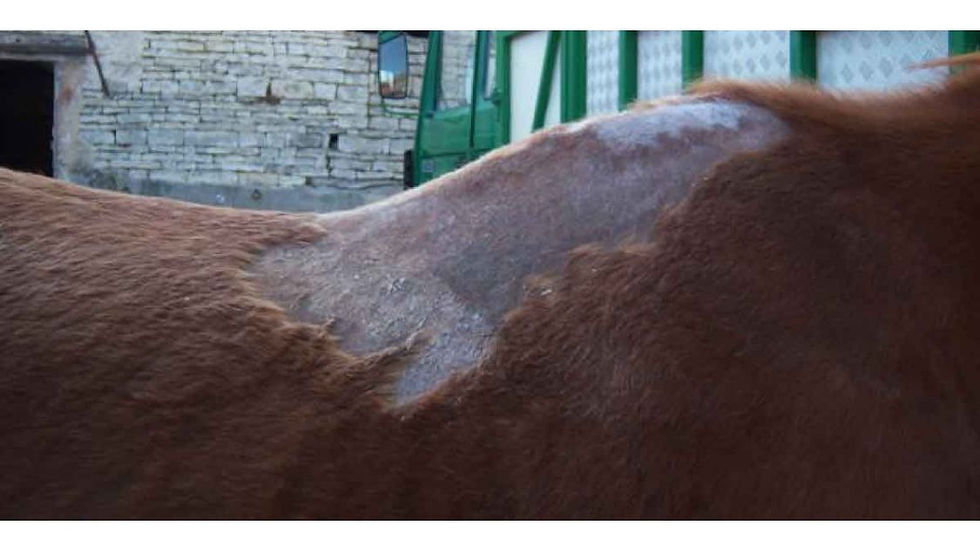
Seasonality
Rain rot is most common during wet, humid seasons and in geographic areas with frequent rainfall, where bacteria thrive in damp conditions.
Symptoms
Mild cases: dry skin flakes and loose hair
More advanced cases: large matted clumps of hair and scabs that are tender to the touch and difficult to remove.
True or false?
Rain rot can be resolved by peeling off the scabs and giving the horse a vigorous grooming.
False.
Rain rot is a bacterial condition, and aggressive removal of scabs can damage the skin and increase the risk of spreading bacteria. Healthy horses normally have a strong skin barrier that helps prevent bacterial penetration, but this protection can be compromised by insect bites, wounds, sores, or prolonged moisture that strips the skin of its natural oils.
As the bacteria invade the skin, small pus-filled bumps (pustules) develop beneath the surface. These bumps are caused by the horse’s immune response. As they mature, the affected skin dies off and forms scabs attached to individual hairs. When these are forcibly removed, the skin underneath is often raw and vulnerable.
If the underlying cause — such as excessive moisture — is corrected, hair may regrow within 7–10 days. However, during this period the exposed skin is more susceptible to insect bites and secondary infections, which can lead to more serious skin problems.

Short-term care approach
Natural support for rain rot- prone skin
Supporting compromised skin during wet conditions starts with a gentle, targeted hygiene routine while addressing environmental factors.
At Double Diamond Equine, we focus on gentle, plant-based care that respects the skin’s natural balance.
👉 Explore Derfongen® by Animaderm a plant-based skin lotion formulated for horses exposed to moisture, mud, and humid conditions.
👉Additional care
When areas are exposed and hair is missing, protecting bare skin from ongoing moisture is important. Using a waterproof skin protectant such as Natjely can help limit further humidity exposure on bare patches.
As always, indicative information - Does not replace consultation with a veterinarian. Contact your veterinarian for more information about rain rot and for recommendations tailored to your horse's individual situation!


Comments